Convection vs Conventional Oven: 5 Differences
July 8, 2026
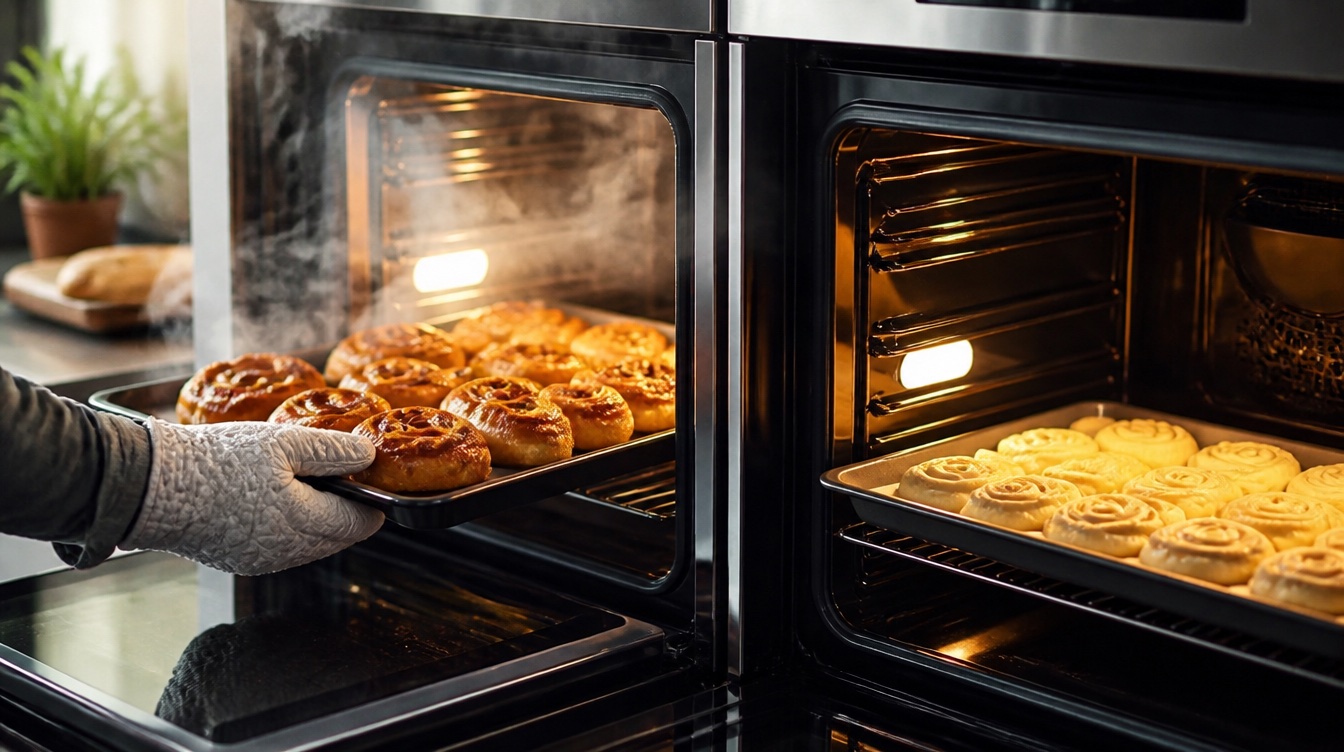
Watch enough of the tent on The Great British Bake Off and you will hear bakers agonize over their ovens: which shelf, fan on or off, whether the back runs hot. That anxiety is real, and it comes down to one distinction that quietly shapes every bake. Here are the five differences between a convection oven and a conventional one, and when each is the right choice.
1. The fan is the whole story
A conventional oven heats with elements at the top and bottom and lets the hot air sit and rise on its own. A convection oven (called a fan oven in the UK) adds a fan, usually at the back, that circulates the hot air around the cavity. Everything else that follows is a consequence of that fan. It is not a different kind of heat, it is the same heat, moved around.
2. Convection bakes faster and more evenly
Because the fan pushes hot air across every surface of your bake, a convection oven transfers heat more efficiently. Food cooks faster, and the temperature is more uniform from the front of the oven to the back and from the top shelf to the bottom. This is why convection is the better choice when you are baking multiple trays at once, say four sheets of cookies for a party: the circulating air keeps the back tray from lagging behind the front one.
3. You have to drop the temperature
This is the rule worth memorizing. Because convection is more efficient, following a recipe's stated temperature will over-bake your food. The standard fix is to lower the temperature by about 25 degrees Fahrenheit (roughly 15 to 20 degrees Celsius), or to keep the temperature the same and shorten the time. Many recipes are written for a conventional oven, so if your oven runs the fan by default, this adjustment is doing quiet work every time you bake. Forget it, and your cookies brown on the outside before the middle sets.
4. Convection browns better, which cuts both ways
That moving air pulls moisture off the surface of your food, which produces crisper, browner, more evenly colored results. For roast vegetables, pastry, bread crusts, and anything you want golden, this is a gift. For delicate items it is a hazard. A tall, tender cake, a souffle, or a tray of meringues can be dried out, lopsided, or skinned over by a strong fan before they have had a chance to rise gently. Custards and cheesecakes prefer the still air of a conventional bake, too.
5. When to use each
Here is the short version.
| Use convection for | Use conventional for |
|---|---|
| Multiple trays at once | A single delicate cake |
| Cookies and pastries you want crisp | Souffles, custards, cheesecakes |
| Roasting for browning | Slow, gentle bakes |
| Bread crusts | Meringues and anything that must not skin |
Most modern ovens let you switch the fan on or off, which means you rarely have to choose one oven forever. You choose per bake. Learn which side of the table your recipe belongs on, apply the temperature drop when the fan is running, and most of the mystery disappears.
A note on the tools
An oven's dial and its actual internal temperature are often ten or more degrees apart, fan or no fan, which is why so many competition bakers distrust the numbers on the front. A cheap standalone oven thermometer settles the argument for good and is the single best few dollars a home baker can spend. For a related paper-versus-paper question that trips people up, see parchment vs wax paper, and if all this oven talk has you wanting to bake along with a show, start with our best baking shows to stream.
More in The Proving Drawer or start with the show guides.