
Pastry Cream, Crème Anglaise or Diplomat Cream?
Published

Need a sauce to pour beside a dessert, or a filling that will stay inside an éclair? That question gets you further than choosing something simply called “custard.” Crème anglaise, pastry cream and diplomat cream have related ingredients but different jobs.
| Preparation | What defines it here | Useful starting task |
|---|---|---|
| Crème anglaise | A flowing, egg-thickened custard sauce | Pouring beside a cake or pudding |
| Pastry cream, or crème pâtissière | A cooked custard thickened with egg and starch | Filling an éclair or fruit tart |
| Diplomat cream | Pastry cream lightened with whipped cream | A lighter filling that retains custard flavor |
For a sauce: crème anglaise
King Arthur’s apple-nut bread pudding includes a crème anglaise made with milk or half-and-half, sugar, vanilla, salt and egg yolks. There is no starch in that sauce’s ingredient list. The method uses controlled heating and a spoon-coating cue rather than asking you to make a thick, bubbling filling.

That is the preparation to think of when a baking show serves a jug of custard alongside a dessert. A sauce that flows is doing its job. Trying to cook it into a firm filling changes the target and risks overcooking the eggs.
For a filling: pastry cream
King Arthur’s pastry cream recipe uses cornstarch with the yolks, milk and sugar. Its method calls for the thickened mixture to bubble, followed by another timed cooking stage. It then needs cooling before use.

That contrast explains why the word “custard” alone is insufficient cooking guidance. An instruction to avoid boiling a starch-free sauce shouldn’t be transplanted into a pastry cream recipe that explicitly requires bubbling. Follow the method for the actual preparation you’re making.
For an éclair or a tart, plan the cooling time as part of the bake. Making the filling early can matter more to your assembly schedule than how quickly you pipe it later.
For a lighter texture: diplomat cream
Diplomat cream begins with pastry cream, then folds in whipped cream. King Arthur’s explanation notes that gelatin is often included for added stability, although it is not required by the name itself.
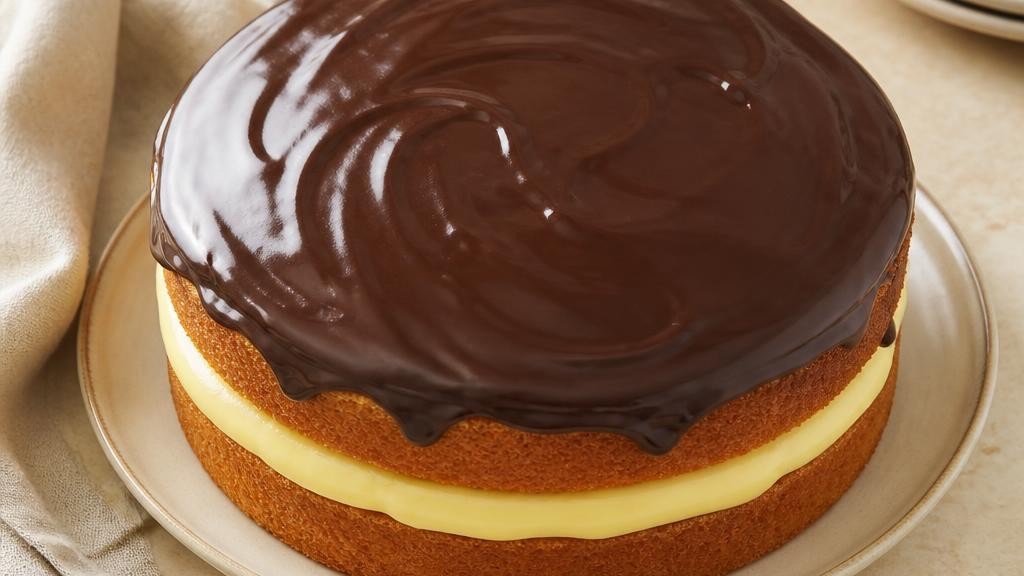
Check the formula before using it in a layered cake. A softer éclair filling and a filling supporting stacked layers may need different structure. “Diplomat” identifies the combination; it doesn’t guarantee that every version will hold the same weight.
The mixing order matters here too. Let the cooked base cool as directed before combining it with whipped cream. Treating warm pastry cream and whipped cream as ingredients you can simply stir together skips the conditions the recipe relies on.
Choose the job before changing the filling
For a plated dessert, decide whether you need something that pours. For pastry, decide whether the filling must pipe and remain in a cavity. For a cake, check both the texture you want to eat and the structure the layers need.
Once you know the job, follow a recipe written for it, including its cooking, cooling and refrigeration instructions. These preparations share enough vocabulary to be confusing, but the finished dessert gives you a clear way to choose.