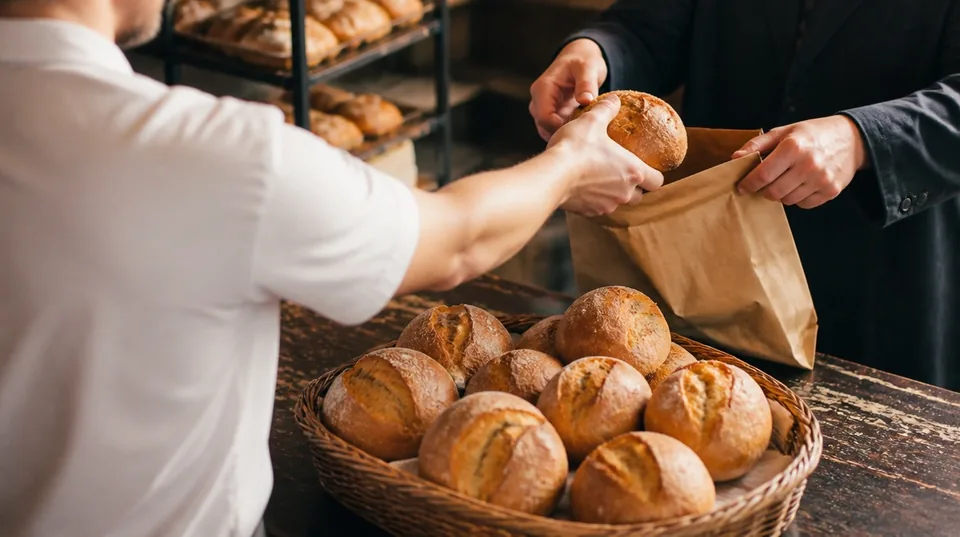
What Is a Baker's Dozen? The 13 Origin Story
July 11, 2026

If someone hands you a baker's dozen, you are getting thirteen, not twelve. It is one of those phrases everyone uses and almost nobody can explain, so here is the short, satisfying story behind the extra loaf, plus the honest caveat that history rarely ties up as neatly as we would like.
The number first
A baker's dozen is 13. That is the entire definition. The interesting part is not the arithmetic, it is why bakers, of all trades, ended up counting to a number one higher than everyone else.
The 1266 bread law
The most widely cited origin sits in medieval England. In 1266, during the reign of King Henry III, a set of regulations known as the Assize of Bread and Ale governed how bread could be sold, tying its weight and price to the going cost of wheat. The point was consumer protection: a loaf had to hit a legal weight for its price, and a baker who sold underweight bread was cheating the public.
The penalties were not gentle. Under the enforcement statutes of the era, a baker caught shorting customers could face heavy fines or corporal punishment, up to being put in the pillory. That threat is the engine of the whole story.
Why bakers threw in a thirteenth
Here is the practical problem. Medieval bakers did not have reliable scales, and bread loses weight unevenly as it bakes and cools. Even an honest baker could not guarantee that every loaf in a batch hit the legal weight exactly. Some would always come out a little light.
The solution was insurance. When selling a dozen loaves, a baker would add a thirteenth, sometimes a smaller loaf or an end piece, so that the total weight comfortably cleared the legal minimum even if one or two loaves were under. That extra was known as the "vantage loaf" or "in-bread." Better to give away a bit of bread than to risk the pillory. Over time the habit of adding one to a dozen hardened into the phrase we still use.
The honest caveat
This is the standard explanation, and it is a good one, but word origins are slippery and this account carries some uncertainty. The 1266 law is real and well documented; the tidy causal link from that law directly to the phrase "baker's dozen" is the popular telling rather than something proven beyond doubt. The phrase itself appears in English centuries later than 1266, which is why careful historians treat the medieval-bread story as the most plausible origin rather than a settled fact. Either way, the underlying logic, give a little extra to stay safely on the right side of a weight rule, fits the trade perfectly.
Why it still matters at the bench
The baker's dozen is a fossil of a time when baking was regulated like a public utility, and it is a nice reminder that weight has always been the baker's true measure, not volume. That instinct survives in every modern recipe that lists ingredients in grams. If you want to bake the way the pros and the competition bakers on the best baking shows actually do, working by weight on a kitchen scale rather than by the cup is the single biggest upgrade you can make. The medieval bakers would have killed for an accurate one. You can buy one for the price of a nice lunch.
For more small facts that make you better at the bench, our guide to convection vs conventional ovens clears up the other thing most home bakers get quietly wrong.
More in The Proving Drawer or start with the show guides.